








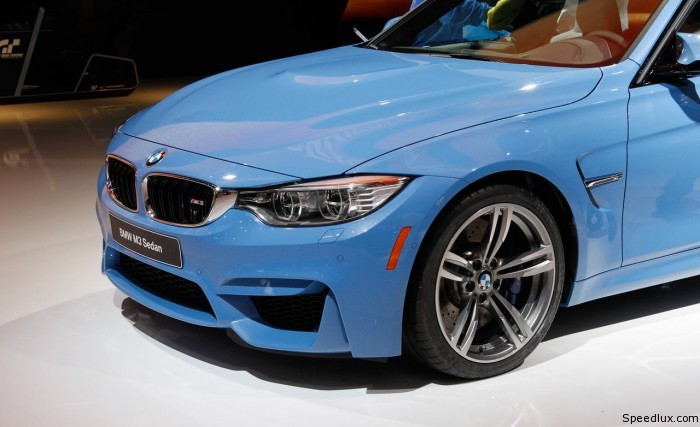
Now Reading: 320i Entry-Level 3-Series makes Detroit Sojourn
-
01
320i Entry-Level 3-Series makes Detroit Sojourn
320i Entry-Level 3-Series makes Detroit Sojourn
The launch of the new F30 3-Series has seen BMW’s European showrooms bombarded with smaller engines.
There’s the 316i, which makes 136 hp from a 1.6-liter turbo petrol engine, or the the 316d, which offers only 114 horsepower.
However, the in the US it has introduced only two petrol engines, the 240hp 328i, which offers a 2-liter TwinPower Turbo engine and the bigger 335i, a bigger 3-liter straight-six.
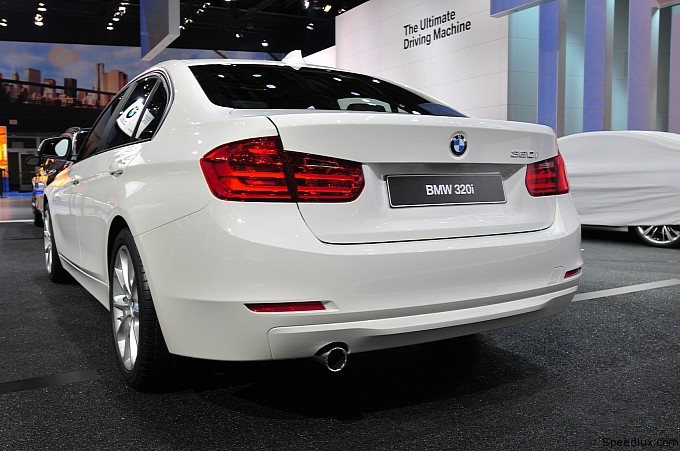
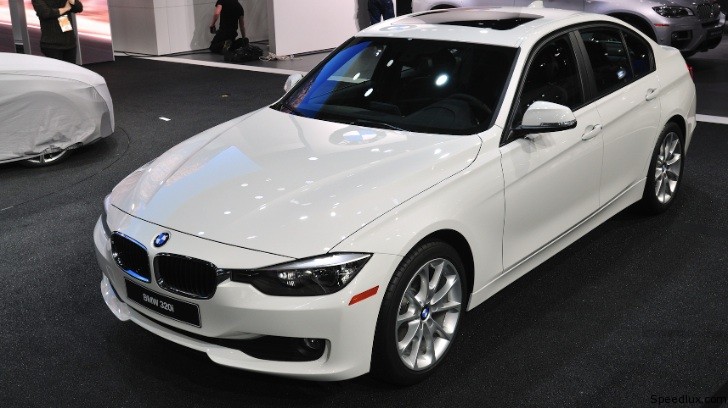
Soon we will see a change since BMW has brought a unique 3-Series to the 2013 Detroit auto show. Its an entry-level model called the 320i.
This mid size 3-Series is not at all bad to begin with. It’s powered by a 2.0-liter TwinPower Turbo 4-cylinder engine, rated in the 320i at 180 horsepower at 5,000 rpm and 200 lb-ft of torque from 1,250 rpm – 4,500 rpm.
The car travels from 0 to 60 mph in 7.1 seconds with either of its two available transmissions. Achieving top is restricted to just 130 mph (209 km/h).
That is the performance one needs to satisfy himself.
Prices start at just $33,445 (including $895 Destination & Handling), which is $4,300 less than the 328i.
Stay tuned to have a look at the picture gallery.


Related Posts
Stay Informed With the Latest & Most Important News
Previous Post
Next Post






Advertisement

-
 01Audi Launches RS3 Competition Limited, Celebrates 50 Years of the Company`s Five-Cylinder Engine Fame
 -
 02Polestar Boss Says It’s Time To Outrun BMW M And Mercedes-AMG
 -
 032026 Corvette ZR1 Production Surges Past Expectations as Output Clears 1,000 Units
 -
 04Spy Shots: 2027 Mitsubishi Pajero Spotted in Testing Ahead of Possible U.S. Return
 -
 052026 Toyota Hilux EV: A Powerful Truck with Silent Torque
 -
 06Spy Photos: VW ID. Polo GTI Goes Electric with 223 HP and 280 Miles of Range
 -
![2027 Mercedes-Benz S-Class Debuts with V8 Engine [Photo Gallery]](https://speedlux.com/wp-content/uploads/2026/01/2027-Mercedes-Benz-S-Class-33-155x125.jpg) 072027 Mercedes-Benz S-Class Debuts with V8 Engine [Photo Gallery]
072027 Mercedes-Benz S-Class Debuts with V8 Engine [Photo Gallery]