








Now Reading: Vauxhall Insignia BiTurbo – Photos and Info
-
01
Vauxhall Insignia BiTurbo – Photos and Info
Vauxhall Insignia BiTurbo – Photos and Info

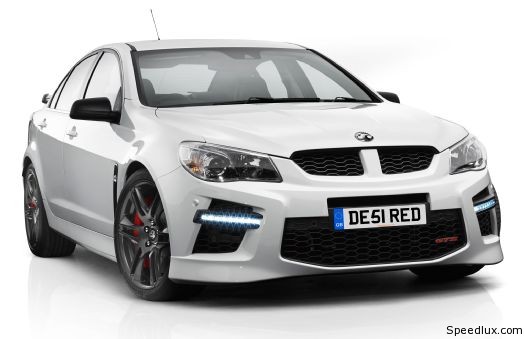
Vauxhall added another choice to Insignia’s engine line-up, and this time it is a BiTurbo. The new 2.0-liter BiTurbo engine that delivers 192 horsepower is powered by diesel, and significantly improves Insignia’s performance.
What’s interesting about this engine is the fact that the smaller turbo is used on a small number of rotations per minute; both of them are used when the rotations are average, and only the bigger one is used at high RPMs.
The BiTurbo Insignia goes from 0 to 62 0.8 seconds faster than the standard Diesel version, which make for a total of 8.2 seconds. Top speed has also been increased by 7 mph, resulting in a total of 143 mph. Torque is 80Nm higher, at 400Nm.
Standard transmission for the BiTurbo version of the Insignia is a six-speed manual that features a stop-start function that helps reduce fuel consumption, by turning off the engine when it’s not being used. The BiTurbo only emits 129 grams of CO2 per kilometer, compared to the standard’s 134 g/km. Fuel consumption also increases from 55.4 mpg to 57.6 mpg.
This car also comes with FlexRide adaptive suspension and sport springs, which make for a cleaner drive and an enhanced control.
The price of the BiTurbo Insignia starts at $43000, a full 3 grand more expensive than the standard. Kind of makes you wonder if it’s worth it…


Related Posts


Stay Informed With the Latest & Most Important News
Previous Post
Next Post



Advertisement

-
 01Audi Launches RS3 Competition Limited, Celebrates 50 Years of the Company`s Five-Cylinder Engine Fame
 -
 02Polestar Boss Says It’s Time To Outrun BMW M And Mercedes-AMG
 -
 032026 Corvette ZR1 Production Surges Past Expectations as Output Clears 1,000 Units
 -
 04Spy Shots: 2027 Mitsubishi Pajero Spotted in Testing Ahead of Possible U.S. Return
 -
 052026 Toyota Hilux EV: A Powerful Truck with Silent Torque
 -
 06Spy Photos: VW ID. Polo GTI Goes Electric with 223 HP and 280 Miles of Range
 -
![2027 Mercedes-Benz S-Class Debuts with V8 Engine [Photo Gallery]](https://speedlux.com/wp-content/uploads/2026/01/2027-Mercedes-Benz-S-Class-33-155x125.jpg) 072027 Mercedes-Benz S-Class Debuts with V8 Engine [Photo Gallery]
072027 Mercedes-Benz S-Class Debuts with V8 Engine [Photo Gallery]