




















Now Reading: How Does Lithium Battery Innovation Affect Electric Vehicle Development?
-
01
How Does Lithium Battery Innovation Affect Electric Vehicle Development?
How Does Lithium Battery Innovation Affect Electric Vehicle Development?
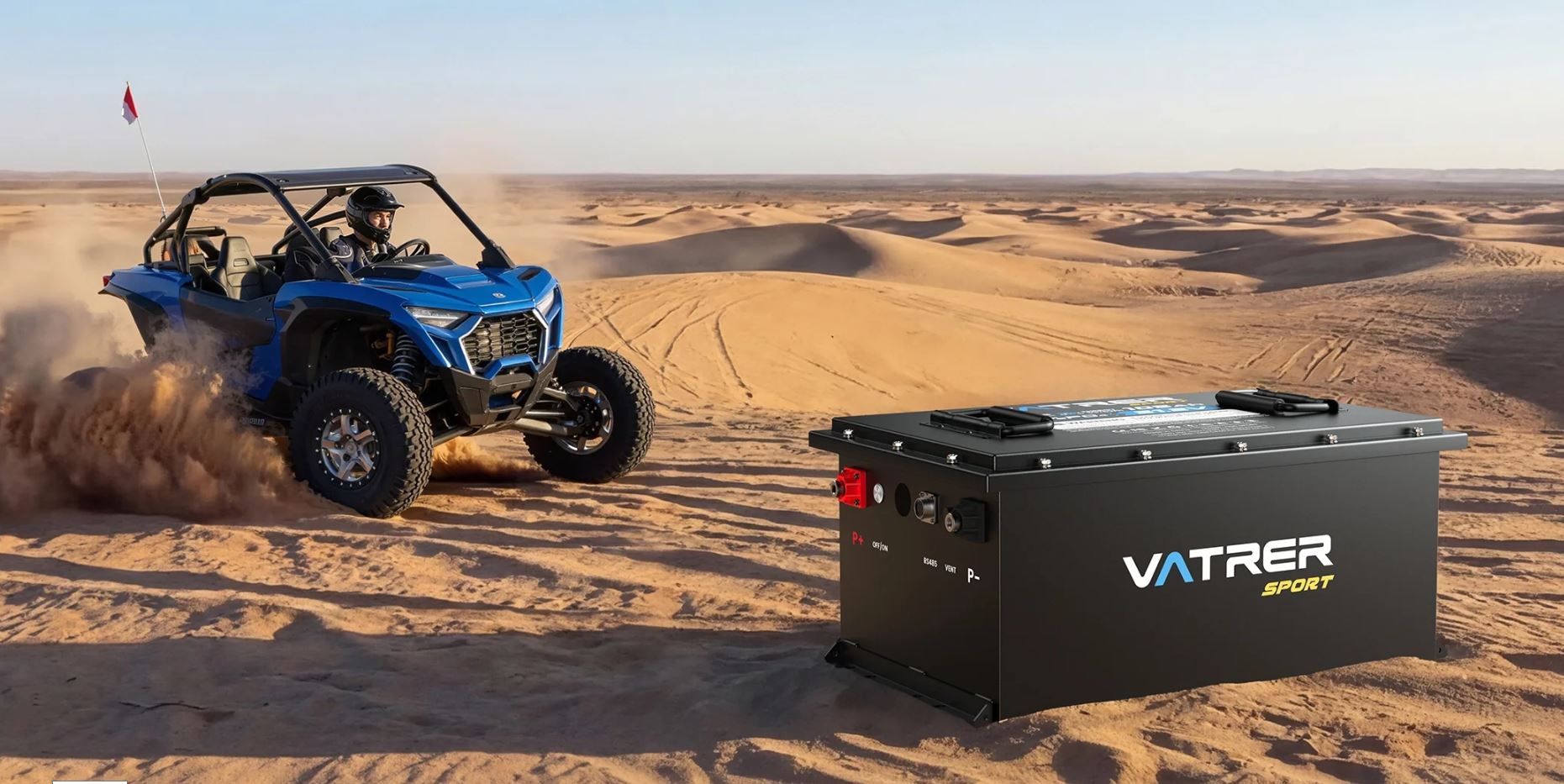
The profound analysis of how the jump from lead-acid to lithium-ion powers the future of all types of electric mobility, from the curbside delivery van to the lowly golf cart.
1. The Battery Revolution: Lead-Acid versus Lithium-Ion
Over the decades, it was a one-line narrative about electric vehicles (EVs): batteries. Lead-acid batteries were the most widespread source of power at the beginning of the 2000s, in municipal fleets, delivery vans, and even the first consumer-grade electric cars. These batteries had a long history; they were inexpensive, strong, and familiar. However, the cost of that heritage was a set of low-energy-density cells that were heavy, had a limited range, made the vehicle heavier, and necessitated the replacement of the cells during a fairly frequent period, which was expensive.
Move ahead, and today, the lithium-ion technology has turned out to be the foundation of the EV revolution. It is not just a technological upgrade, but a complete redefinition of what an electric car can do. The transformation may be divided into four fundamental benefits:
| Comparison | Lithium-Cell Battery | Lead-Acid Cell Battery |
| Charging Time | 120 minutes | 30 minutes |
| Cycle Life | 1,000-2000 cycles | 300-500 cycles |
These facts are quite eloquent: lithium-ion batteries are less massive, they store more power, they charge faster, and they have a longer lifespan. The outcome is that vehicle designers have developed a radical reconsideration of both range, weight distribution and maintenance budgets.
2. The Bigger Picture: Beyond the Road Electric Mobility
Whenever the majority contemplate the idea of electric mobility, the images of smooth cars and autonomous buses become the main topic of discussion. The true core of the EV system, however, lies in a range of small, so-called micro-EVs: electric scooters and bikes, delivery vans, and golf carts. These are the vehicles that commonly provide the initial point of contact with consumers or businesses that are pursuing electric power and demonstrate the short-term payoffs of lithium-ion batteries.
Battery limitations are of particular concern to micro-EVs. One kilogram of weight of the battery may have a direct impact on the speed of the vehicle, its maneuverability, and the cost of operation. Lithium-ion replacement implies:
- More Range: A golf cart that previously required a 30 mile charge at night can now cover 60-80 miles in a single charge and no longer requires daily charges.
- Reduced Operating Costs: Faster charging decreases the downtime. The longer cycle life implies that there is less battery replacement and wastage.
- Easy Maintenance: Lithium-ion batteries are configured with advanced Battery Management Systems (BMS) to check the health, charge status, and temperature of the battery in real time, eliminating the necessity of a manual check.
To conclude, the lithium-ion revolution has created an opening: micro-EVs are now able to compete with their gasoline-powered counterparts at least in terms of performance but also in terms of price and environmental friendliness.
3. In the Limelight: Golf Carts as a Micro-EV Testbed
Battery innovation is a perfect place for golf carts. The industry is very accommodating to changes in power technology due to the nature of the industry which requires the use of good transport that is affordable and quick to use. Historically, the majority of golf courses had used gasoline or lead-acid electric carts:
- Gasoline carts were loud, fume-producing, and had to be fueled on a schedule.
- Lead-acid carts were noisy but silent, heavy, and required maintenance.
Introduction of lithium-ion: the breakthrough of the first generation of electric golfing. Carts were made lighter, more agile, and less expensive to run. Over 70 percent of the new golf carts available in the market in 2020 were powered by lithium-ion. It is not only the number of carts but also the quality of life that it will give to both players and staff.
4. An Empirical Case Study: Vatrer Lithium Golf Cart Batteries
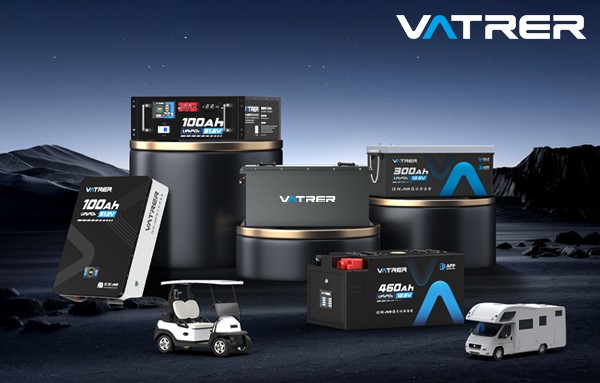
Vatrer Power has established itself as a market leader in this niche. They represent what the micro-EV market has been longing to get, their lithium-ion batteries:
- Durability: 2,000-5,000 full charge-discharge cycles – basically 10 years or more of service at moderate usage.
- Weight Savings: 4050 percent lighter than comparable lead-acid packs. That is 200lb drop in weight of a cart that weighs 1,000lb, which enhances the acceleration rate and lessens the chassis wear.
- Rapid Charge: 80% capacity within less than 45 minutes. It would translate to a 45-minute wait at the tee rather than an hour at the fueling station.
- Advanced BMS: Monitoring of real-time cell conditions, balanced charge, overcharge protection, estimation of state of health – it results in the decrease of failures and the increase of the battery life.
- Temperature Control: Low-temperature control prevents charging below 32 ° F and discharging below -4 °C. This has the effect of reducing the number of cancellations of races that would be caused by battery failure in colder climates.
- Connectivity: A Bluetooth-powered application allows course managers to monitor battery performance and patterns of use, enabling predictive strategy and path optimization.
The point that is demonstrated by Vatrer is the bigger one: the micro-EV platform has been a test ground of the features that would become common to all EVs.
5. The Trickle Down Effect on the EV Bottom Line
This began on a golf course, which led to all kinds of electric cars. The design principles that Vatrer is built on, namely lightweight construction, quick charging, minimal maintenance, and intelligent connectivity, are rolling to bigger scopes in buses, delivery vans, and even full-size vehicles.
The car comes with built-in batteries engineered into the vehicle casing.
Battery packs are no longer an afterthought to manufacturers. Rather, they are making the battery a structural part. This move brings about the following advantages:
- Weight Distribution: The floor has batteries that weigh down the vehicle, enhancing the handling.
- Structural Integrity: Batteries may be included in the frame of the vehicle, which provides extra stiffness and safety.
- Packaging Efficiency: Less external housing results in a reduced overall weight of the vehicle.
Some firms, such as Tesla, have led this design with their battery-in-the-box design. Rivian and Lucid are not alone as others are catching up and demonstrating a new generation in which energy storage is not a distortion of the car but an inherent aspect of engineering.
Diversification of energy storage technologies is another key concept in this article, which is important to take into account. Another important concept to consider in this article is the diversification of Energy Storage Technologies.
Although lithium-ion is the leading technology, there are alternative technologies that are offering even superior performance, safety, or price:
- Solid-State Batteries: Have a higher energy density and are much safer, as they use substituted liquid electrolytes.
- Sodium-Ion Batteries: Less expensive raw materials, which, however, lower energy density at the moment.
- Graphene-Enhanced Cells: There are the potentials of increased conductivity and flexibility.
Studies in this field are fast, and the initial prototypes have already shown good results. The rivalry is good; it has challenged lithium-ion technology more, causing faster advancement on cell chemistry, safety, and manufacturing efficiency.
Hardware is not the only problem in battery performance. Modern BMS systems combine sensors, communication, and data analytics, which allow:
- Real-time Diagnostics: Preventive warning on battery rundown.
- Range Management: Intelligent route planning considering battery health.
- Energy Optimization: Dynamic load balancing to either lengthen range or decrease charging load.
The Vatrer application is a mini-trend of this. Remote monitoring in commercial fleets allows drivers to get a battery health update and charge schedule sent directly to their phone, minimizing downtimes and expanding costs of operation.
6. Environment and Economics Impact: Win-Win Solution
The switch to lithium-ion batteries provides real environmental gains:
- Less Toxic Waste: Batteries made of lead-acid include lead and acid, which are dangerous. Lithium-ion is not totally innocuous; however, it can be more easily and safely recycled.
- Reduced Lifecycle Emissions: The battery life will be longer, which reduces manufacturing processes and raw material digging.
- Energy Efficiency: The increase in energy density and charging rate decreases the total energy consumption.
The financial rewards are also very attractive. The price of lithium-air batteries has decreased by over 80 percent during the past ten years, and it has declined to approximately less than 150 per kilowatt hour. Added to the reduced maintenance and increased operational uptime, the cumulative cost of ownership of an EV is now competitive and, in many cases, less expensive than internal combustion cars.
7. Real-World Applications: Rise of Small Change
7.1 Delivery Fleets
A large logistics firm had declared last year that it had replaced 1,200 gasoline vans with electric ones, with lithium-ion packs that have a 200-mile range. The firm stated that it had cut its fuel expenses by 30 percent and its maintenance bills by 15 percent. The enabling factor: rapid and dependable charging systems, based on cheap lithium-ion cells.
7.2 Public Transit
A Midwestern mid-sized city that has not yet transitioned to electric buses substituted its older diesel buses with newer electric buses, which were possible due to new packs of lithium-ion that fit between the bus chassis without the need for significant redesign. The transit authority in the city reported better acceleration, a smoother ride, and a 40% cut in the operating costs. The battery had a long cycle life, which implied that there was less need for battery replacement during the lifetime of the fleet.
7.3 On‑Demand Mobility
Ride-hailing enterprises are investigating electric Uber and Lyft. It is also tested in pilot cities for the ability to have fast charging stations that are available on the go in the city centers, as well as battery swapping stations. The high cycle life and the fast charge time of lithium-ion batteries are enabling these pilots to be feasible.
8. The Future: What Is Next to Lithium-Ion
The battery technology is an endless innovation cycle. Although lithium-ion will be the leading one over the next decade, we already notice that newer technologies will intervene to shore up its shortcomings:
- Safety: Solid-state batteries will boast of a fire-resistant electrolyte.
- Energy Density: Improvements in graphene and silicon anodes can be used to increase the present energy densities.
- Price: Sodium ion and other inexpensive chemistries can further reduce prices.
Despite these breakthroughs gaining momentum, lithium-ion having an infrastructure built around it will continue. There will be a development of charging stations, grid management systems, and supply chains to support various chemistries. The most important lesson: the bottleneck of all EVs will still be the battery, and the design, production, and management of these batteries will have an impact on the entire industry.
9. Summary: The Battery as the Engine of Tomorrow Mobility
It is not a technological leap, but a paradigm shift that transforms how we think, design, and use electric vehicles, and that is the process of making lithium-ion battery technology and battery technology in general out of lead-acid. All advantages, including more energy density, quicker charging, better life, and reduced impact on the environment, provide us with a new palette to design lighter, cleaner, and cheaper to operate vehicles.
Even such small, niche applications as golf carts using lithium batteries by Vatrer can change the world. The fact that they have been successful indicates that the same battery enhancements can be transferred to buses, delivery vans, and personal cars so that the idea of a completely electric future can become a reality.
The lithium-ion chemistry will continue to evolve further into the 2020s, with the ongoing research on solid-state cells, sodium-ion cells, and graphene-based ones continuing to keep the train moving. Combined with intelligent BMS, data analytics, and coherent vehicle design, we are on the way to a world where it will not only be possible but desirable to choose electricity as the main means of mobility.
In a word, the revolution in the battery is the driving force of mobility in the future, and lithium-ion technology is the fuel that is propelling us towards having a quieter road, cleaner air, and a more sustainable world.

Stay Informed With the Latest & Most Important News






Advertisement

-
 01BYD’s Great Tang Arrives As a Flagship SUV with 1,500 kW Charging and a Nine-Minute 10–97% Claim
 -
 02Nissan Sets New GT-R Direction with Hybrid V6 Plan and Fresh Chassis Before 2030
 -
 03Audi Launches RS3 Competition Limited, Celebrates 50 Years of the Company`s Five-Cylinder Engine Fame
 -
 04Polestar Boss Says It’s Time To Outrun BMW M And Mercedes-AMG
 -
 052026 Toyota Hilux EV: A Powerful Truck with Silent Torque
 -
 062026 Corvette ZR1 Production Surges Past Expectations as Output Clears 1,000 Units
 -
 07Chinese EV Brand Zeekr Builds Strong Reputation Among Australian Buyers